
Everybody's Hungry
Ramadan and Lent Overlap This Year

The first day of Ramadan was last week and Tetovo is about 70% Albanian, which in this neck of the woods means they are likely Muslim. As my Minnesota pals likely know (most of us have been exposed to Islam through our Somali diaspora neighbors) during the thirty days of Ramadan observers fast during daylight hours (no food, no water, no smoking, no coffee), breaking their fast with an iftar meal at sunset. Ramadan began on February 17 and will end on March 19, followed by Eid al-Fitr on March 20.
In the Orthodox church Lent began on February 23 (with “Clean Monday” rather than “Ash Wednesday” as in the Roman Catholic and some protestant faiths). For my Roman Catholic pals, you probably remember not eating meat on Fridays (fish was ok) and “giving something up” (like candy or TV - in most cases imposed by parents) for the forty days prior to Easter. The Orthodox here refer to Lent as a time of fasting, and here is the list of things they do without for the forty days: meat, dairy products, eggs, oil and wine (alcohol). Fish is allowed on certain days during Lent. Often Orthodox observers only eat one meal a day, sometimes two. It’s much more hardcore than the Catholic Lent I was exposed to growing up.
We only know one Macedonian Orthodox family here, but they spoke of their Lenten fast with affection and some pride. When I asked Alexandra if she lost weight during Lent, she said that oddly she usually gained weight because she eats so much more bread during that time!
But most of the folks we know here are observing Ramadan. Today I was invited to an iftar dinner, so after my breakfast before 8:00, I stopped eating until we broke the fast close to 5:30 p.m. For anyone who has ever worked with me, that’s a real shock as I am a “grazer” and am almost continuously munching something at my desk. Here’s a picture of the iftar table:
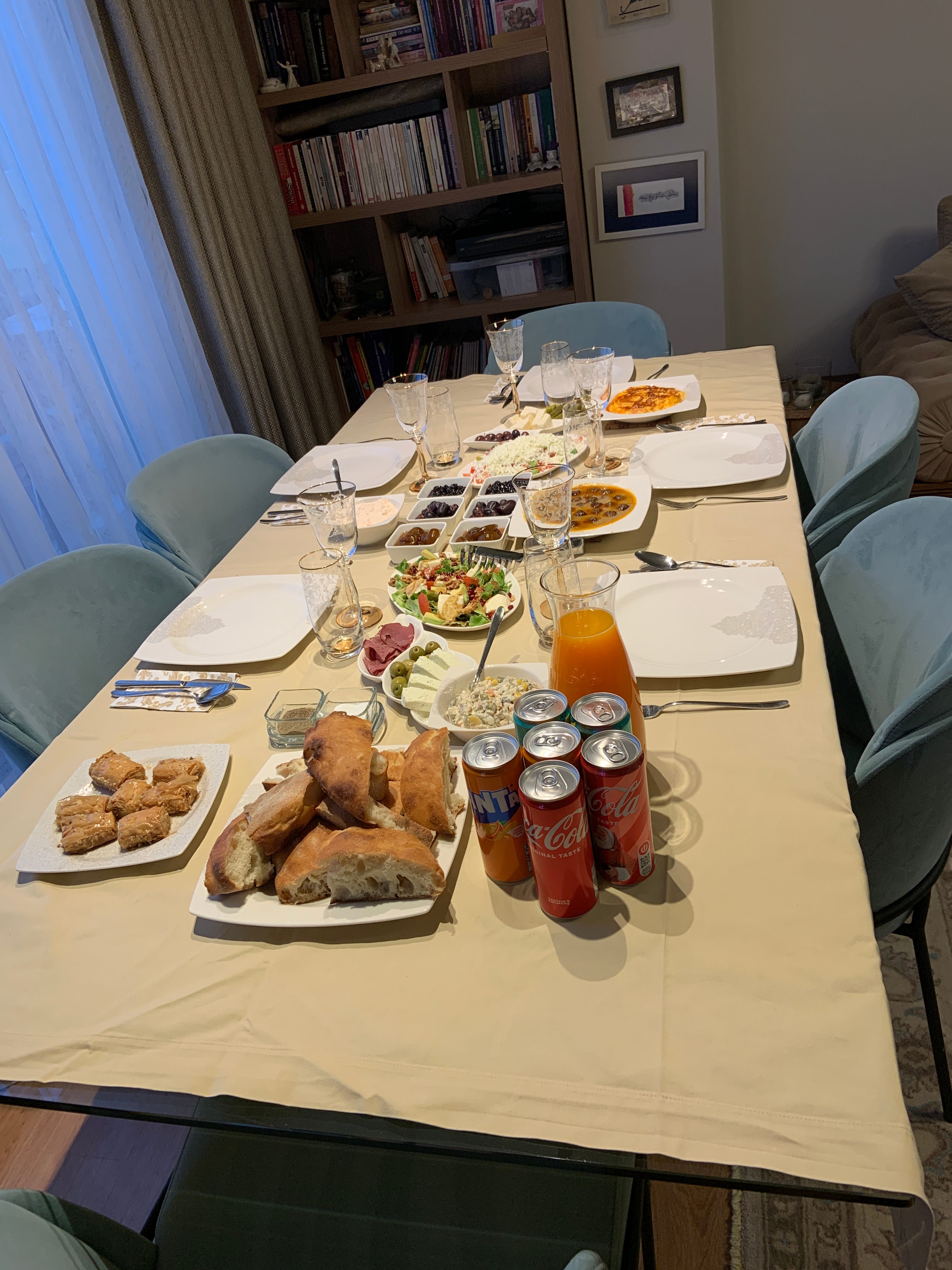
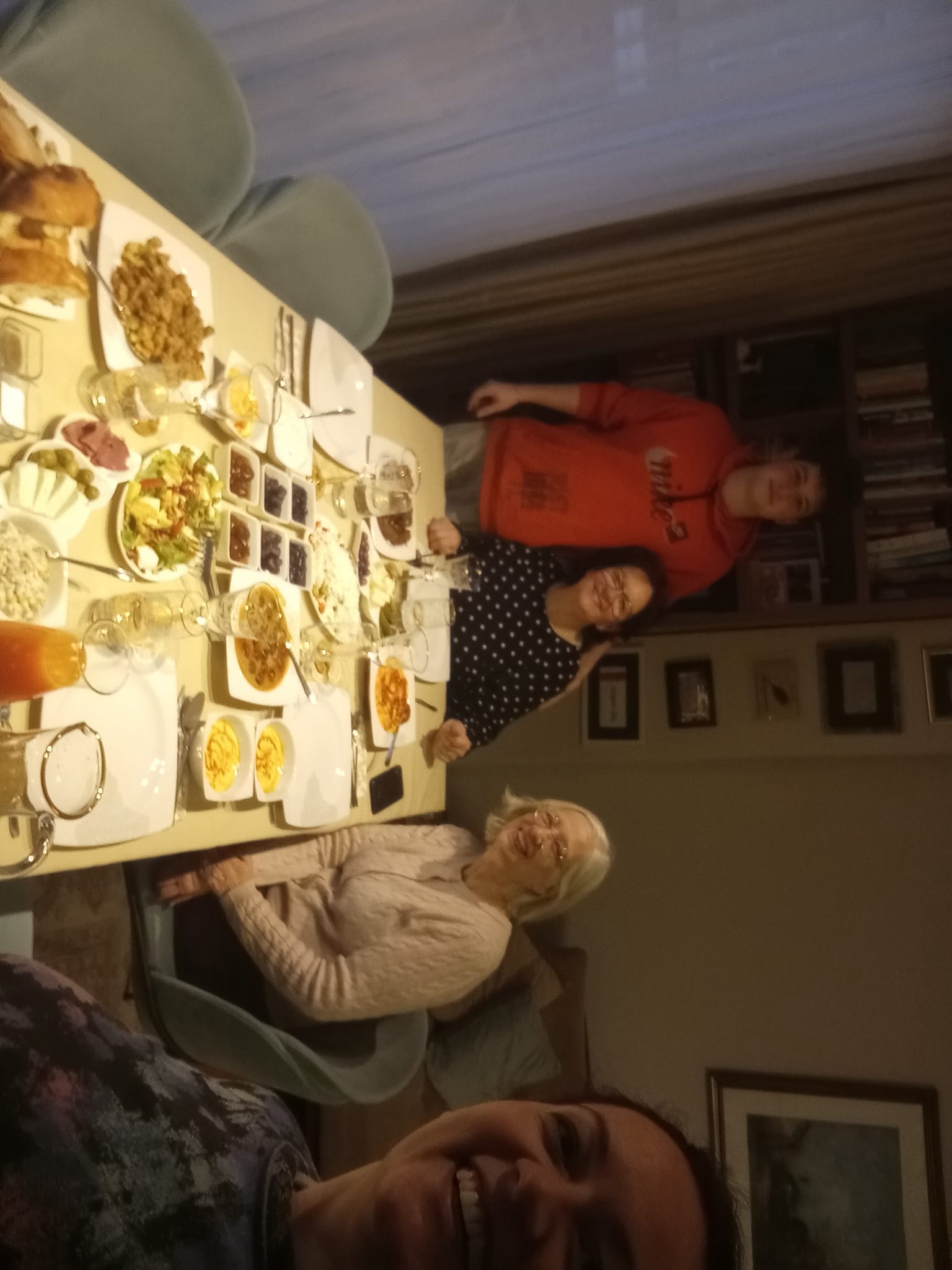
Elmedina (my host) tells me that all the food is laid out ahead of time, so when the call from the minaret begins at sundown they’re ready to dive in. Here we are at dinner - Behr (Elmedina’s son), Elmedina’s mother, me and Elmedina)
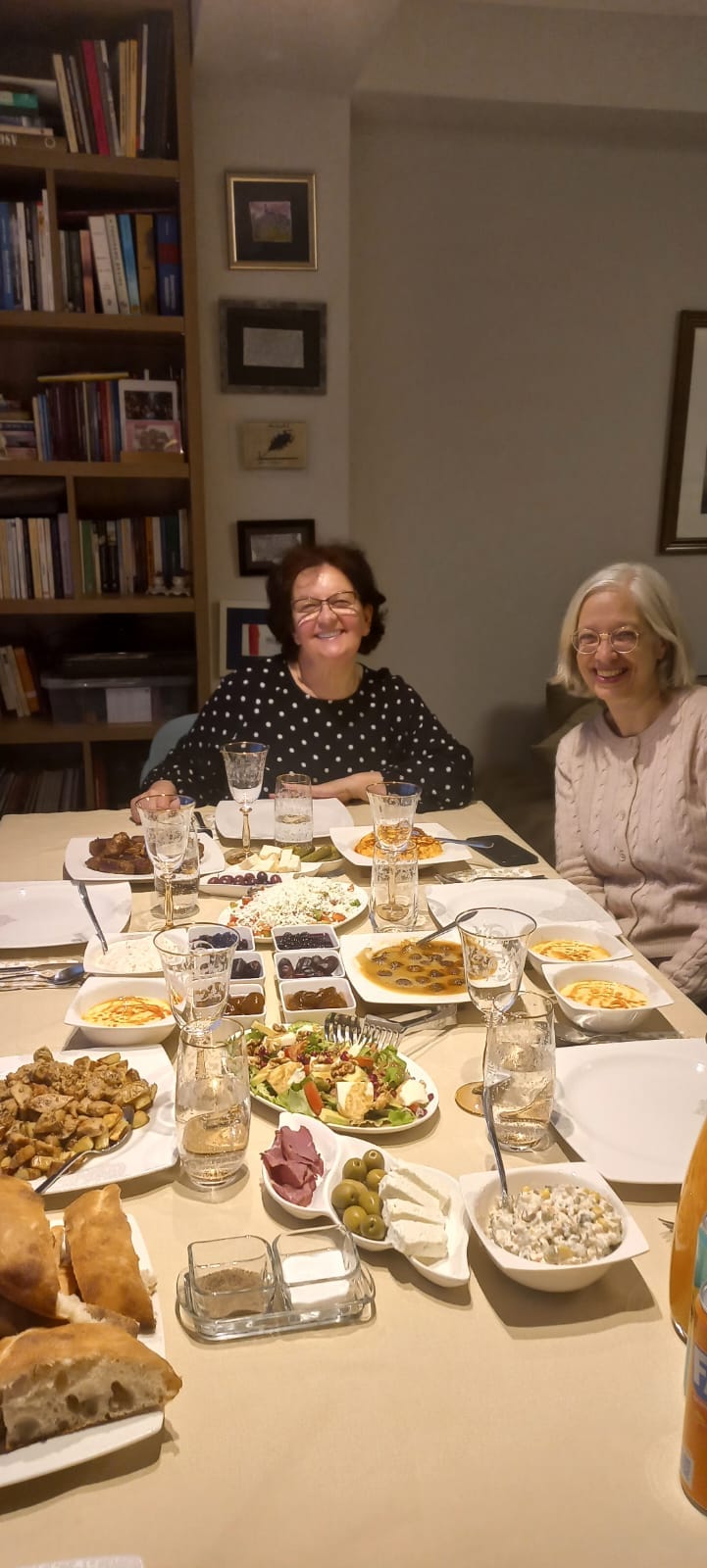
Here’s another of just “mom” and me after Behr had left to go out with friends (he’s 24 so I understand):
When the muezzin began the call, the family murmered a quick prayer (sounded like a classically mumbled, “Bless us oh Lord, and these thy gifts…” or “Come Lord Jesus…”) and then a sip of water. There were dates on the table and I thought that it was traditional to also eat a date to break the fast, but this family just dug into the main dishes. I was pretty hungry too so very much enjoyed the meal and learning about all the traditional foods.
People I’ve spoken to tell me how much they love Ramadan. They love their own family’s food traditions, they feel “cleaner” and healthier when they fast, they enjoy the energy in town when people go out after iftar and their prayers and have coffee or dessert at the local coffee shops (I can attest to a heightened energy and more people walking around in the evening). It really doesn’t seem to be a chore or a dreaded obligation, or maybe it’s just that the people who want to tell me about it are the real enthusiasts. But it’s interesting to hear how people experience fasting and the whole Ramadan experience.
So it’s a little bit of a weird time to be here, with the two major religious groups in a period of fasting. Good luck finding a restaurant that’s open at the time you want. I’ve been told that by late afternoon people are somewhat lethargic (no coffee!!) or crabby (no cigs!), but I haven’t noticed that yet. This self-imposed discipline by so many (not everyone is religious or practicing either faith) interests me a great deal. It seems that both religions focus on mindfulness, self-discipline, and increased prayer; and Ramadan adds the element of charity and social responsibility to the mix.
After all this writing, I don’t have much insight - other than to say that I was mighty hungry by afternoon, but I still did the things I had to do (go to an appointment, teach an English class). And as I walked the streets today I wondered about the people I passed. Were they fasting? Were they also hungry? And how can one tell? It’s a good reminder to me that I can’t really tell anything about someone unless I actually connect with them and talk with them. People who haven’t eaten since the night before look the same as everybody else. And people refraining from all those Orthodox things don’t look any different from those who don’t.
Ash Wednesday was February 18 this year, so props to my folks at home who are observing Lent in whatever way you do it. It seems that a lot of people all over the world will be seeking a closeness to God simultaneously this year. Power to all of you!
I’ve been invited to another iftar dinner on Saturday. Will I do the full-on fast this time? I think I’ll try. I’m certain I’m not doing it “right” but none of these practices seem to be about perfection. Rather, they’re a contemplative time - and it seems to me that’s not a bad thing.
Karen
What great experiences you are having with new friends! I love all this. And could it be that food, and the customs and hospitality that surround it are really interesting to me? Ha! Keep sharing…. both food and your insights.
What a great experience!